
(Click to expand) Biosensors
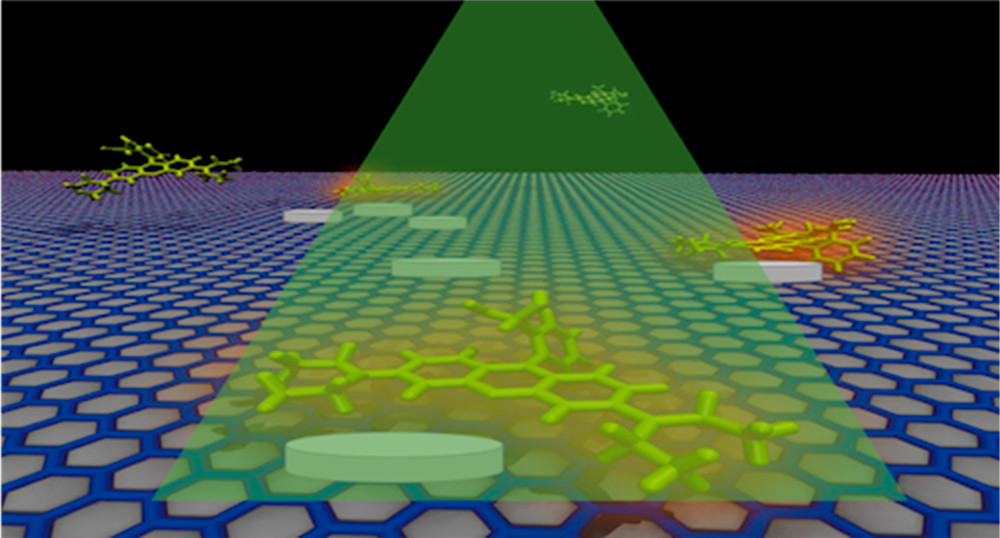
Our group has previously worked on surface plasmon coupled emission and fluorescence quenching sensor platforms such as AIDLuQ. The AIDLuQ platform (developed by our lab) consists of functionalized luminescent CdSe QDs deposited on top of a substrate coated with chemically exfoliated few-layer graphene or FLG. The functional molecules attached to the QD surface facilitate specific binding with a desired analyte. When the QDs are in close proximity to the FLG surface, their luminescence is quenched due to non‑electromagnetic radiative energy transfer with FLG. In the current project, we are using single-layer graphene based field effect transistors (GFETS) to perform electrical transport, atomic force microscopy, and ultrafast transient luminescence measurements to understand the nature of interactions between single-layer graphene and CdSe QDs in biosensing.
(Click to expand) Quantum biophysics
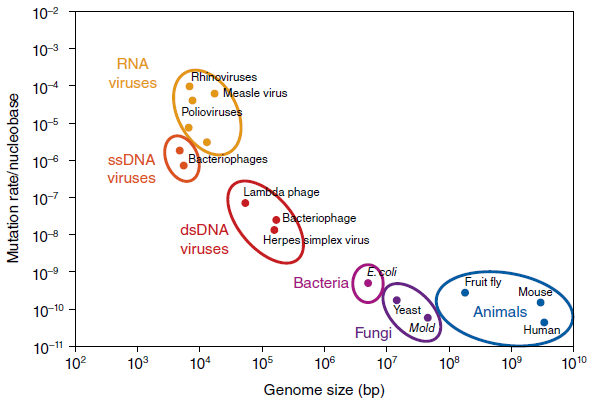
Based on existing data of viral quasispecies, we hypothesize that a viral RNA is an intrinsic quantum object and cannot be treated classically. The rationale in beginning with viral RNA is that the quantum effects are expected to be more clearly visible at lower genome sizes. This is much the case of materials where quantum effects are more apparent at a nanoparticle level compared to the bulk. In this project, we are developing an analytical quantum mechanical model of RNA virsuses to fit experimentally observed viral quasispecies and mutational waves in addition to making new testable predictions beyond the exisiting models. Most quasispecies are often mapped with viruses emanating from multiple cells. In order to provide a better resolution of the quantum nature of the genome, it is necessary to map quasispecies emanating at a single-cell level. To this end, we propose to obtain single cell quasispecies data for ssRNA viruses with different sizes (5-300 kb). In order to rigorously mathematize appropriate interaction potentials, we will study the effects of different perturbations on the trajectory of quasispecies at a single-cell level. To this end, we propose to map quasispecies of HCV from single hepatoma cells in the presence of static and dynamic electric and magnetic potentials. Particularly, we will perform these experiments in the presence of a solenoid that produces a non-zero magnetic vector potential with a zero magnetic field (similar to Aharanov-Bohm effect) to truly identify the quantum nature of the genome. Different mutational states (with sufficiently long coherence time) maybe accessed using external perturbations. While being a high-risk project, we believe that this area has a high potential to make paradigm-shifting contributions to our understanding of life and possibly have applications in biological quantum computing and cryptography.
 Laboratory of Nano-BioPhysics